

Argentina Sea News: Sea Suddenly Recedes Before Powerful Wave Hits Coast
Argentina Sea News — September 8, 2026: A dramatic incident on Argentina’s Atlantic coast has renewed attention on an unusual weather-driven ocean phenomenon after seawater rapidly pulled away from the shoreline before a powerful surge moved back toward the beach.
The viral footage does not show Argentina’s sea permanently disappearing. The unusual retreat was connected to a rare meteotsunami event that affected parts of Buenos Aires Province in January 2026.

Mar del Plata, Argentina, on the Atlantic coast.
Photo Credit: Erik Stattin / Wikimedia Commons. Wikimedia Commons .
Why Did the Argentina Sea Suddenly Move Back?
Videos shared online created the impression that the ocean had suddenly vanished from Argentina’s coastline. In reality, the water movement was temporary and was followed by a much stronger return of seawater.
The event occurred on January 12, 2026, along several beaches in Buenos Aires Province, including Santa Clara del Mar, Mar Chiquita, Camet and areas around Mar del Plata. Reports described an abrupt withdrawal of seawater followed by a powerful surge.
Scientists use the term meteotsunami for tsunami-like waves produced by atmospheric disturbances rather than an underwater earthquake. Rapid changes in air pressure and weather conditions can cause the sea surface to rise and fall unusually quickly.
Sea Retreat Was Followed by a Powerful Surge
One of the most striking parts of the incident was the sequence of events. Witnesses first saw the shoreline move farther out than normal. This exposed portions of the beach and seabed that are normally covered by water.
The retreat was followed by a sudden return of water, producing dangerous waves and strong currents. Reports said waves reached several metres above the normal sea level in some locations.
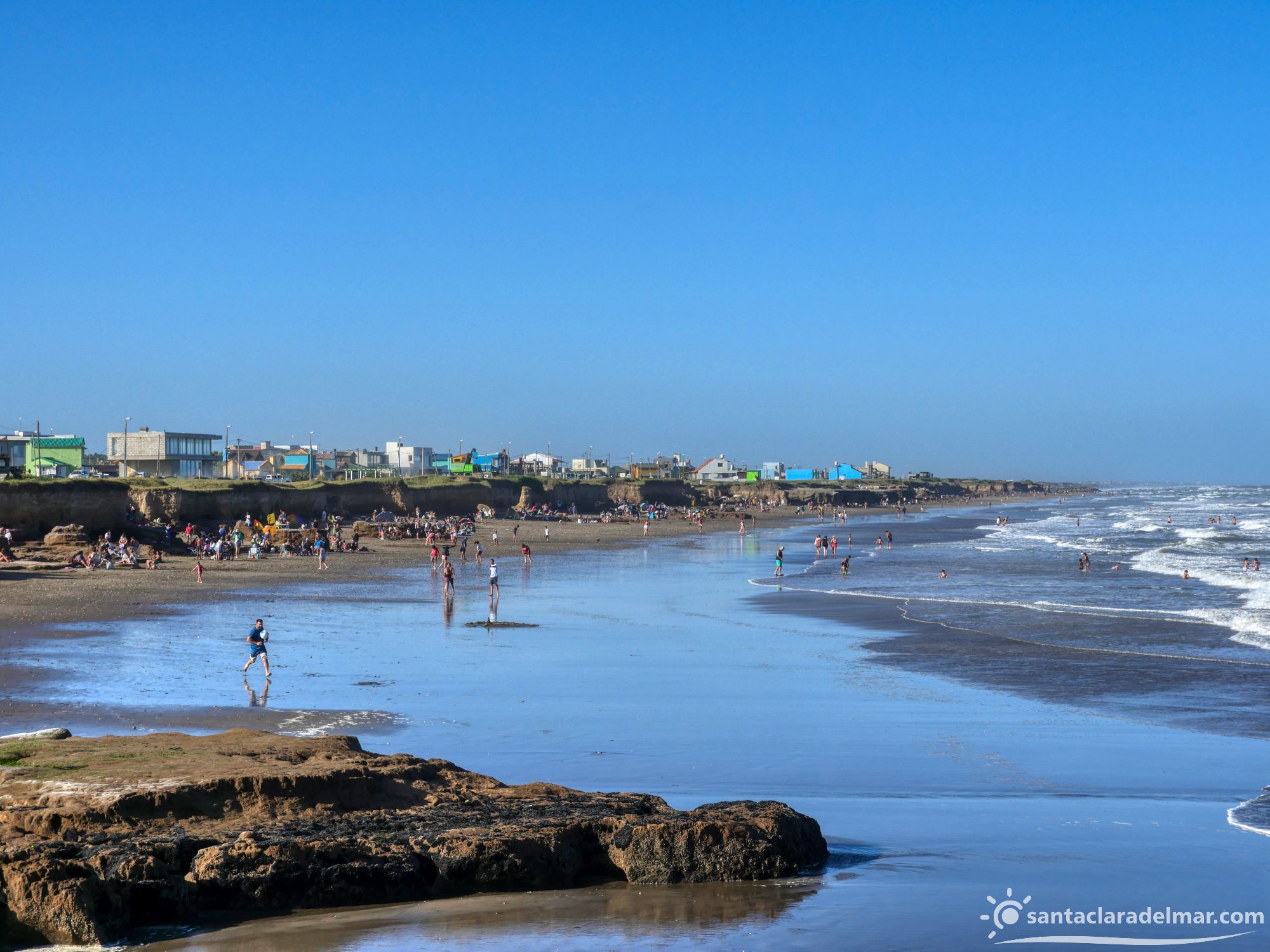
A representative view of Santa Clara del Mar’s Atlantic coastline. This image is not a photograph of the January 2026 event.
Photo Credit: SantaClaraDelMar.com. Image used as a representative coastal photograph.
Was Argentina’s Ocean Really Disappearing?
No. The Atlantic Ocean did not disappear, dry up or permanently move away from Argentina.
The viral descriptions were largely based on dramatic video footage showing the temporary withdrawal of seawater. Such a retreat can look extraordinary when viewed without the surrounding scientific and weather context.
The important point is that the water returned. In fact, during a meteotsunami, a sudden withdrawal can be followed by an especially dangerous surge.
What Makes a Meteotsunami Different From a Normal Tsunami?
A conventional tsunami is generally associated with major disturbances beneath the ocean, such as an undersea earthquake, volcanic activity or a landslide.
A meteotsunami, by contrast, is linked to atmospheric conditions. Fast-moving weather systems and abrupt changes in atmospheric pressure can disturb the sea surface and create waves that behave somewhat like tsunami waves.
- Earthquake tsunami: Usually caused by movement beneath the ocean.
- Meteotsunami: Triggered by atmospheric pressure and weather disturbances.
- Normal tide: A predictable rise and fall of sea level caused mainly by the gravitational effects of the Moon and Sun.
Argentina Coastline Saw a Rare and Dangerous Event
The January incident was particularly alarming because it happened during a busy summer period, when Argentina’s Atlantic beaches were crowded with visitors.
Reports indicated that one person died and dozens of people were injured after the sudden waves struck several coastal locations. The incident demonstrated how quickly unusual coastal conditions can become dangerous.
The event also explains why videos showing an apparently empty stretch of sea should not automatically be interpreted as evidence of an approaching earthquake or an environmental catastrophe.
Why Did the Story Go Viral Again?
Social media has brought renewed attention to the incident because short clips showing the water pulling away from the beach are visually dramatic. Without a date or location attached to the footage, viewers can easily assume that the event is happening somewhere in Argentina right now.
Some posts have also described the footage as proof that the Argentine sea “dried up.” That description is inaccurate. The water movement was temporary and part of an unusual coastal event.

Mar del Plata's Atlantic coastline, shown here as a representative image.
Photo Credit: Unsplash / Mar del Plata photo collection. View source .
What Should Beachgoers Do If the Sea Suddenly Retreats?
A sudden and unusual withdrawal of seawater should always be treated seriously. People near the coast should avoid walking toward newly exposed areas simply to take photographs.
If authorities issue an evacuation warning, beachgoers should immediately move away from the shoreline and follow official instructions. A rapidly changing sea level can be followed by strong waves and currents.
The Bottom Line
The viral Argentina sea footage shows a genuine and unusual coastal phenomenon, but the claim that the country's ocean permanently disappeared is false.
The January 2026 event involved a rare meteotsunami along Argentina’s Atlantic coast. The sea first moved away from parts of the shoreline and then returned with powerful waves. The episode highlights how atmospheric conditions can create sudden and dangerous changes in coastal water levels.
In short: Argentina’s sea did not disappear — it temporarily retreated before a powerful weather-driven surge.
Current reporting on the viral Argentina sea footage: OnlineKhabar
Background reporting on the January 2026 meteotsunami: The Watchers
Additional reporting: MercoPress
Editorial note: This article is written in original wording for publication on your blog. Representative photographs are clearly identified and credited. The photographs shown above should not be presented as photographs of the January 2026 meteotsunami itself.

