

Saudi Arabia Closes East-West Oil Pipeline After Iraq-Linked Drone Attacks Cause Injuries

What Happened to Saudi Arabia's East-West Pipeline?
Saudi Arabia temporarily suspended operations on its East-West oil pipeline after multiple attacks were reported in the Riyadh and Madinah regions on Thursday morning, September 10. The Ministry of Energy said the shutdown was a precautionary step while specialist teams secured the line and checked its safety.
Saudi Arabia's Foreign Ministry later said that several drones launched from Iraq had targeted the pipeline. The ministry reported injuries and material damage, but did not provide a detailed casualty figure.
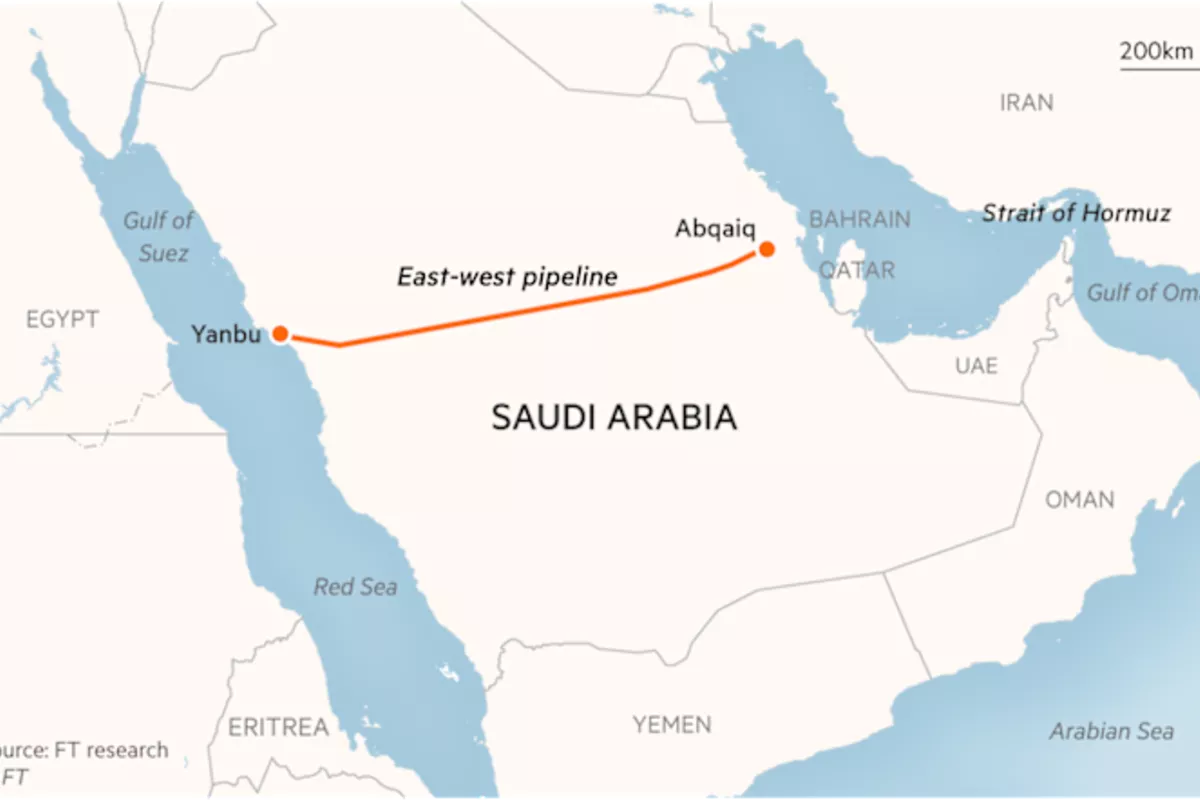
The incident has placed one of the kingdom's most important alternative oil-export routes under renewed pressure. The East-West Pipeline carries crude from Saudi Arabia's eastern oil-producing areas toward the Red Sea, allowing exports to avoid the Strait of Hormuz.
Why Is the East-West Pipeline So Important?
The pipeline, also known as the Petroline, stretches for roughly 1,200 kilometres between Saudi Arabia's eastern oil infrastructure and the Red Sea export hub at Yanbu. Its strategic value becomes especially important whenever shipping through the Strait of Hormuz is disrupted or threatened.
By moving crude overland, Saudi Arabia can reduce its dependence on tankers travelling through the narrow maritime chokepoint. That makes the pipeline an important part of the kingdom's energy-security strategy and a major factor in the stability of international oil supplies.
- Saudi Arabia temporarily halted the East-West Pipeline as a precaution.
- The attacks occurred in the Riyadh and Madinah regions.
- Saudi Arabia said several drones were launched from Iraq.
- The attacks caused injuries and damage, according to Saudi authorities.
- Emergency and specialist teams were deployed to secure and assess the pipeline.
- The pipeline links Saudi oil-producing areas in the east with the Red Sea port of Yanbu.
- Riyadh has chosen not to retaliate immediately after a request from Iraq's prime minister.
What Did Saudi Arabia Say About Iraq?
Saudi Arabia strongly condemned the attacks and said it was giving the Iraqi government an opportunity to investigate and prevent further attacks originating from Iraqi territory.
Riyadh said it would not respond militarily at this stage following a request from Iraq's prime minister. At the same time, Saudi officials stressed that the kingdom retains the right to take measures necessary to protect its sovereignty, security, infrastructure, citizens and residents.
Iraq has condemned the attack and launched an investigation. Iraqi authorities also dismissed a regional military commander after investigations indicated that the drone attacks had originated from within Iraq's Maysan province.
Will the Pipeline Shutdown Affect Oil Supplies?
The immediate effect will depend on how long the shutdown lasts and how much damage needs to be repaired. The pipeline is particularly important because Saudi Arabia has increased its reliance on the Red Sea route while maritime conditions around the Strait of Hormuz remain highly disrupted.
A prolonged interruption could place additional pressure on oil markets because the route provides an important alternative for moving Saudi crude toward export terminals on the Red Sea. Market concerns are therefore likely to focus on the duration of the shutdown, the condition of affected facilities and the security of other energy infrastructure.
Why the Attack Matters Beyond Saudi Arabia
The incident comes during a period of heightened tension across the Middle East, with several major energy and shipping routes facing security risks. The East-West Pipeline was designed in part to provide Saudi Arabia with an alternative to sea routes through the Strait of Hormuz.
At the same time, developments around the Red Sea and Bab el-Mandeb are increasing concerns about the reliability of another route used by global energy and commercial shipping. Any combination of pipeline damage, maritime disruption and attacks on energy infrastructure could increase volatility in international oil markets.
Saudi Arabia Holds Off on Immediate Retaliation
For now, Saudi Arabia has chosen restraint rather than an immediate military response. The decision gives Iraqi authorities time to investigate the origin of the attacks and take action against those responsible.
The situation remains fluid, however. Saudi Arabia has made clear that protecting critical infrastructure is a priority and that it reserves the right to act if further attacks threaten the kingdom.
Video Coverage
Watch the latest video news coverage and reporting on the Saudi East-West Pipeline shutdown and the wider regional energy situation.
▶ Watch Reuters Video CoverageWhat Happens Next?
The next stage will depend on the technical assessment of the pipeline and the investigation into the drone attacks. Saudi emergency and specialist teams are working to secure the affected facilities, while Iraq faces pressure to prevent its territory from being used for further attacks.
For global energy markets, the key questions are how quickly the pipeline can return to service, whether other facilities were affected and whether additional attacks occur. Those factors will determine whether the incident remains a short-term security disruption or develops into a wider oil-supply concern.
Saudi East-West Pipeline News: The Bottom Line
Saudi Arabia has temporarily closed its East-West oil pipeline after drone attacks that the kingdom says originated from Iraq caused injuries and damage in the Riyadh and Madinah regions. The shutdown is being treated as a precaution while technical teams assess and secure the infrastructure.
The pipeline is strategically important because it provides Saudi Arabia with a land-based route to the Red Sea and helps reduce dependence on the Strait of Hormuz. With regional shipping and energy infrastructure already under pressure, the latest attack adds another layer of uncertainty to the global oil market.
Saudi Press Agency (SPA): Official Saudi statement on the drone attack
Reuters: Saudi Arabia shuts East-West oil pipeline after drone attack
Al Jazeera / AFP: Reporting and satellite-image coverage of the pipeline incident
Graphic source: The Caspian Post
Pipeline photo source: Suresh Babunair / Wikimedia Commons, CC BY 3.0
The article has been independently written in original wording and is not a reproduction of any source article.

